Join our typography community!
A friendly online forum for all questions around fonts and typography. Get answers to all your typography questions or help others with your expertise.
Typography Feed (complete)
- Past hour
-
My addled brain finally kicked in : it's Co Title if you're curious.
-
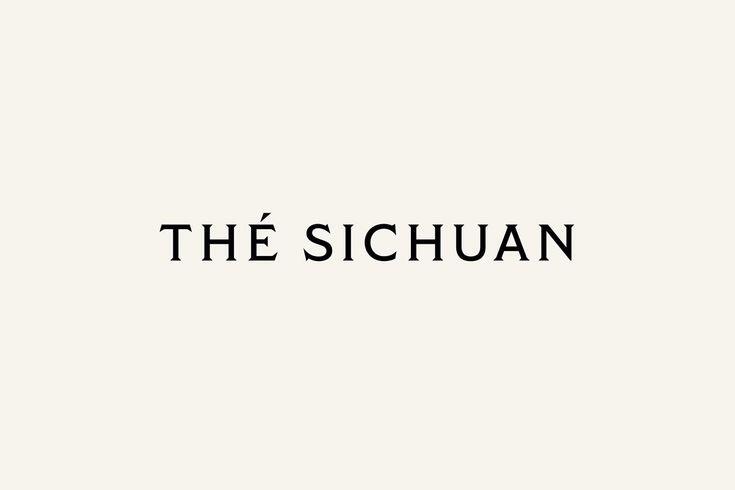
Hi all, I have another font i'm trying to source. It's for a fragrance brand. Trying to find something as close as possible. Thanks!
-
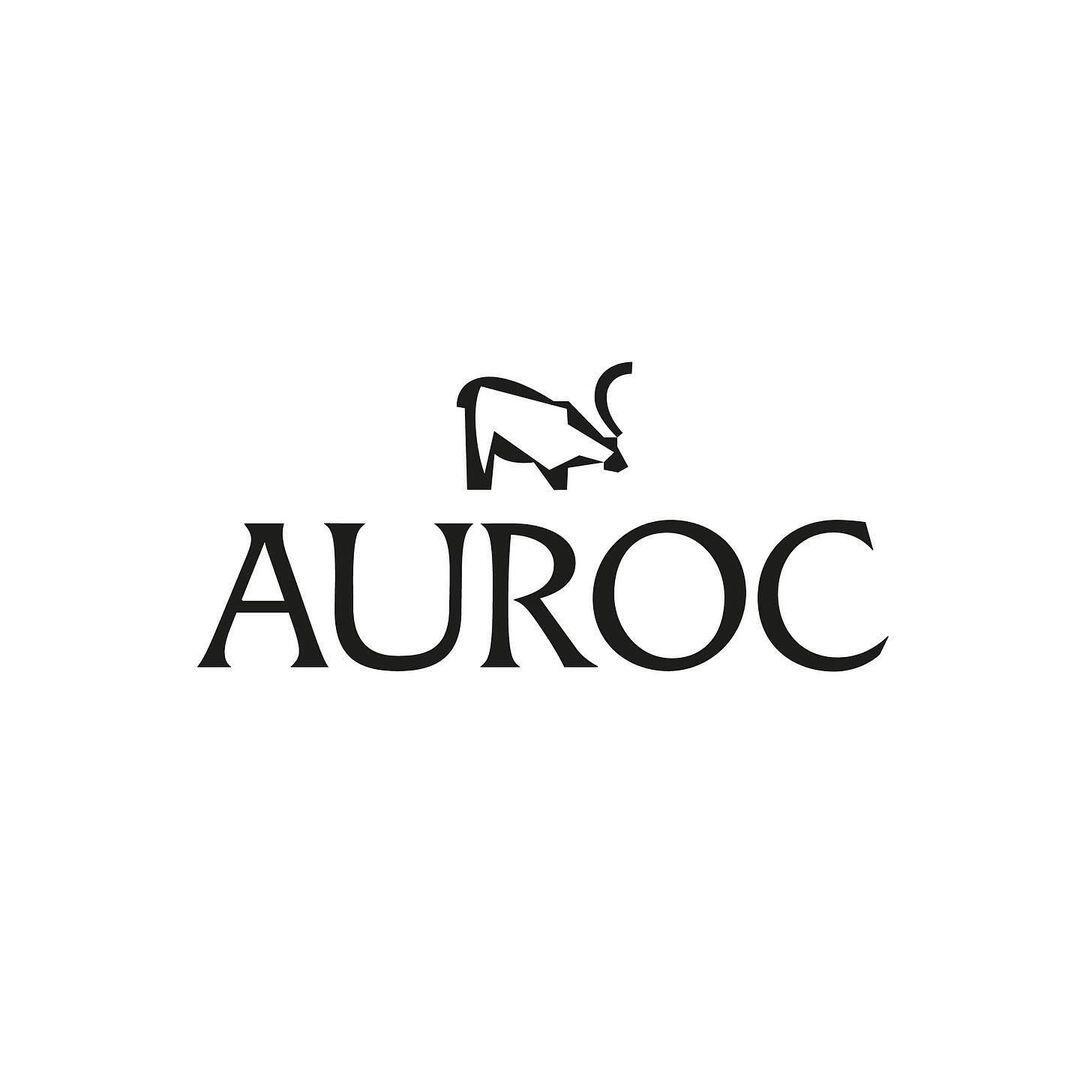
Hi Everyone, Have another font I'm trying to source. It's this for the company 'AUROC' - looks a little like Flareserif but some of the characters aren't correct, particularly the cap 'R' - thanks!
-
Thanks so much Kevin - Perfect!
- Today
-
Thanks Kevin !
-
havavery joined the community
-
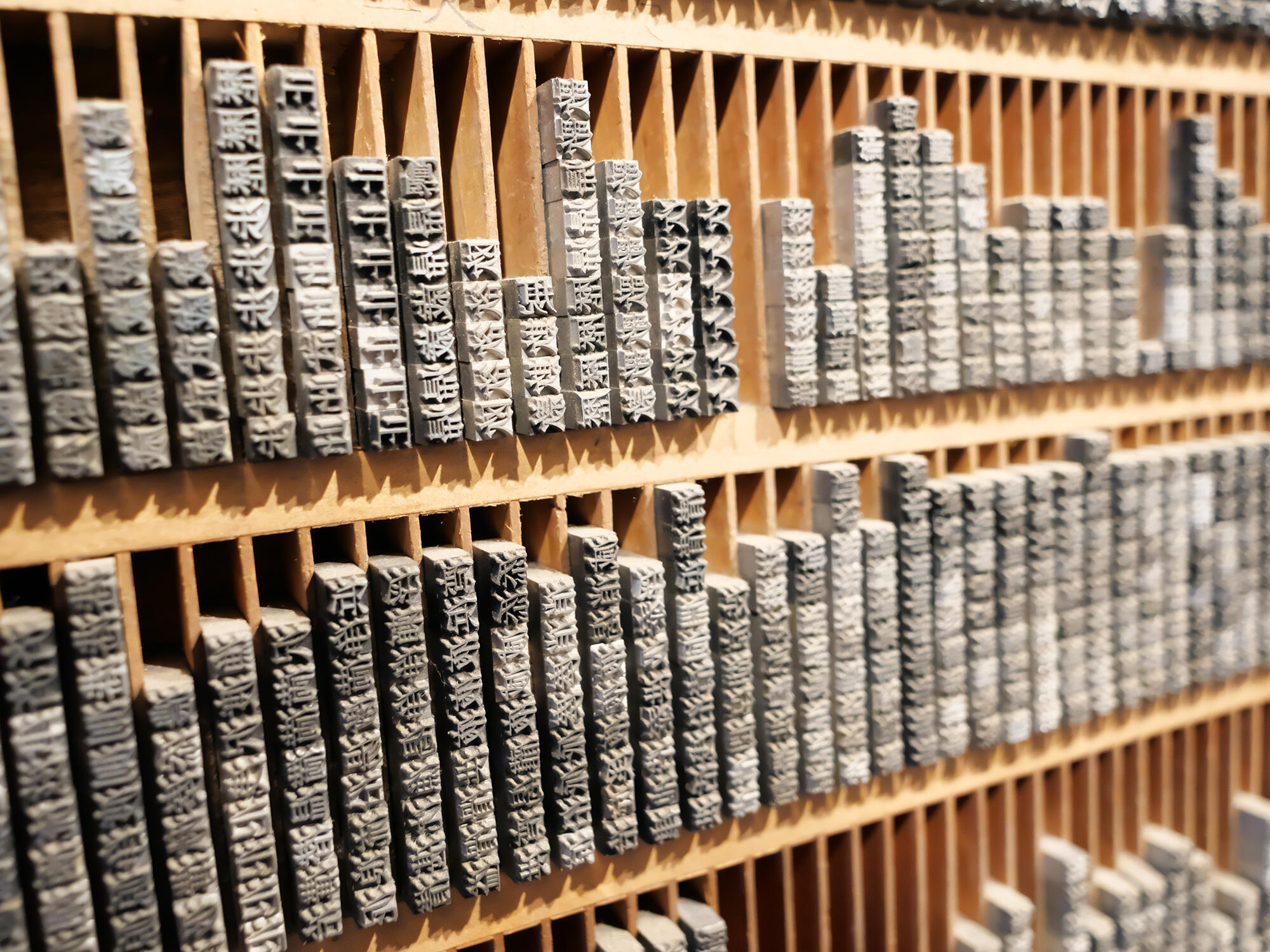 By Vicki Tinnel. This research paper sets out to study the evolution of western-influenced Japanese typography from the turn of the twentieth century to the modern digital age. The last one hundred years have seen more changes in script and typography than the previous four hundred years combined. Not since the kana scripts (hiragana and katakana) were developed in the fifth and sixth centuries has there been so much reform and growth in Japan’s written forms. This is due in part to the demands for reform in response to becoming a more globally minded nation, emerging even before the dramatic effects of World Wars I and II. Now, being a worldwide leader technology and commerce, there is both a beautiful tension and mindful balance that Japan is striking between honoring their ancient traditions and appealing to modern sensibilities. Edo, Meiji, and ShowaTo begin, we will observe multiple time periods that shaped Japanese typographic evolution. The Edo period, which has its origin in the seventeenth century, beautifully encapsulates the artistic influence of Japan’s Arts and Crafts movement. It was during this time that Japan rejected international contact for over a hundred years during its period of isolation (1603-1716). In the 18th century, the shogun Yoshimune (ruled 1716-1845) restored some links to the rest of the world. However, even by the mid-nineteenth century, Japan refused to trade with the West. In the Treaty of Kanagawa, Japan restored trade with the United States by opening up two ports to American ships. Not long afterward, the Japanese also negotiated peaceful trading agreements with Great Britain, the Netherlands, and Russia. In 1868, warlords in western Japan deposed the last shogun, Yoshinoby, and replaced him with the fifteen-year-old emperor, Mutsuhito, who took the name Emperor Meiji. Meiji sent Japanese students abroad to study, welcomed foreigners to Japan, outlawed the caste system, abolished the samurai and initiated a forty-year period of rapid modernization in Japan (Classical Conversations, 124). Prior to this period of restoration with foreign interactions, tradition was paramount. Researcher Ory Bartal asserts: “In Japan, the shape of a letter has held great importance from a very early time. Traditional Japanese calligraphy has several writing styles: tansho, reisho, and sosho. Each letter can be written differently, each having its own meaning. In other words, the writing style is not just decorative, but a meaningful tool that builds the visual shape of the language and influences the textual content, just as much as the words themselves” (57). Ellen Lupton dissects the preliminary changes that began to occur with the newly shifting focus during this time: “Traditionally, Japanese people wrote in vertical lines with a brush, but with the spread of imported books written in Western languages after the Meiji Restoration, people began writing in horizontal lines with a pen as well” (190). Lupton goes on to highlight the Tsukiji Type Foundry which appeared in the 1860s and had a profound effect on how the Japanese approached typography. Its creator, Motogi Shozo (born 1824), is credited as Japan’s Father of Typography. He came from a long line of language interpreters and grew up in the maritime trade industry of Nagasaki. Learning everything from the importance of printable communication to the ins and outs of steel type-casting, he set out to make a mark in print publication. Motogi invited Irish printing expert William Gamble to spend four months with him in Japan. Within that time, they created The Center of Teaching Typography. After Gamble left, Motogi opened a printing shop named Shinmachi. This foundation is what later became known as the first type foundry in Japan, the Tsukiji Foundry, established in 1873. “After years of toil and experiment, Motogi invented types for Japanese characters and for the first time, made printing a business. We owe, indeed, to him alone the success and prosperity of Japanese typography in modern times. He is, therefore, most deserving of our esteem, as the Father of Japanese Typography. – Mataga Shiqeri” (DesignCultureNow). In the compilation work by Silbergeld, Bridges to Heaven, Duke professor Gennifer Weisenfeld, contributed her work, Japanese Typography and the Art of Letterform, where she illuminates some of the dynamics that followed Motogi’s work: “Despite its repeated introduction to Japan from China, Korea, and Europe over many centuries, movable type (letterpress printing) was not widely adopted in Japan until the late nineteenth century due to the high cost and relative inconvenience of casting individual types for thousands of characters. Because of the difficulty and expense of developing type, as well as the inability of type to simulate adequately the dynamism of calligraphy, the majority of innovative and expressive letterform designs in Japan, until the inauguration of digital fonts in the computer age, has been hand-designed printed lettering rather than actual cast typefaces, what Kawahata has termed kaki moji” (830-831). Public interest began to take notice as more and more print publications became available to the general populace during this time. This was due, in no small part, to the contribution of local bookstores that aspired to make a greater mark in their individual communities. This priority has only grown over time. In The Typographic Imagination, Nathan Shockney writes of one such pioneering establishment: “At the vanguard of Japan’s modern book trade was the iconic Nihonbashi shop Maruzen, which was founded in 1869 and remains one of the country’s best-known bookstores. At Maruzen, Western books were media that heralded new forms of knowledge, and the store’s original stock consisted of reference texts like Noah Webster’s American Dictionary of the English Language and other foreign textbooks and encyclopedias. The store’s mission to bring Western knowledge to the Japanese public was evident in the shop’s original name, Maruya, written with the character for “sphere” and chosen to evoke the globe and the wide world. Maruzen’s mission to procure foreign literary and philosophical texts made the store a site for authors and intellectuals seeking new ideas from abroad; in addition to reading material, Maruzen also provided the necessary tools for writing modern literature, including imported European paper, ink, and pens. Maruzen thus furnished both the possibility to consume modern literature and the media by which to produce it” (95-96). This produced a symbiotic cycle where, as Shockney describes, “Interest in Edo (era) fiction helped drive the used-book trade, as woodblock-printed, string-bound wahon were distinct from cheap mass-market editions, and illustrated early modern genres like kibyōshi could not easily be reproduced through typography alone” (108). Later, he illustrates how the reading population of local communities exploded between 1912-1923, going from approximately 3.6 million library users to nearly 21 million (115). The Edo period of typography, while culminating to its height after the Meiji Restoration, began to see its end in a very physically dramatic way. History records a massive 7.9 magnitude earthquake in Japan, which has come to be known as the Great Kanto Earthquake. Not only were cities decimated and hundreds of thousands of people perished, but also firestorms consumed more volumes of material than we have record for. Tokyo Imperial University Library alone saw the destruction of 760,000 volumes (Shockey, pg. 116). Such a nationwide loss could seem too insurmountable to overcome. Instead, however, it became the dawn of a new typographic era, known as the Showa period, lasting from 1926-1989. Hope and determination gave birth to innovation like never before. Shockey quotes designer Chihiro Otsuki explaining, “We can leverage new printing technology to create a new archive, with photographic reproduction and metal-plate technology, allowing the reprinting of woodblock or script editions in their full visual splendor, rather than simply transferring the textual content into type and losing the specificity of their format” (113-144). Tokyo Imperial University professor Takeda Goichi made a call for ‘new letterforms to fit modern commodities,’ stating that “beautiful typography is the most effective way of promoting the worth of a commodity” (Silbergeld, 831). Here, Weisenfeld eloquently addresses the results of this phoenix-like emergence and resilience that mark the Showa period. She teaches: “The 1920s and 1930s mark the emergence of a modern professional design field in Japan. An increasing division of labor in the visual arts (particularly between fine artists and those in applied arts) led to a broad-based systematization of specialized knowledge. A new professional self-awareness among designers took place concurrently with the rapid expansion of the consumer market, and the mass media ignited a widespread interest in the communicative potential of letterforms for national and commercial purposes. Japanese designers transmitted artistic, subjective, and ideological meaning through the skillful orchestration of the linguistic multivalence of the Japanese language” (846-847). So, what changes emerged out of this Showa chrysalis? The answer can be found in three dimensions: Letterform, Character Sets, and Directionality. It begins with the first element of typographic change, letterform. “Calligraphy was said to have bones (authority and size), meat (the proportion of the characters), blood (the texture of the fluid ink), and muscle (spirit and vital force)” (Purvis, 181). To understand the letterforms’ evolution, Weisenfeld advises observers to look at the calls for reform taking place at this time from multiple sectors: “Japanese debates on language reform in the late nineteenth and early twentieth centuries are …critical to understanding the status and development of written language in the modern period. Standardization, legibility, and access were pressing concerns for both politicians and commercial entrepreneurs in Japan’s rapidly emerging national public culture. Contentious debates over what should constitute a national written language, which bear witness to the immense social and political significance of visible language, formed the ideological backdrop to the development of modern letterforms. These debates, while unresolved, merit discussion as a preface to an analysis of specific design programs. The hybridization of the Japanese language signifies the process of Japan’s transculturation” (828). Letterforms, Directionality, Character SetIn 2019 a presentation was given by Florence Fu of ATypI in San Francisco, a nonprofit dedicated to the preservation of Japan’s typographic history. She presents that before the twentieth century (during the Edo period), letterforms were based on calligraphy and handwriting, also referred to as edomoji or edoscripts. What was utilized before the 1920s-1930s was referred to as ‘traditional’ and included Sumomoji, Kagomoji (thick, dense scripts) and whiskered Higomoji script. During the 1920s-1930s, there was a boom in trade publishing that produced many blends of traditional scripts with more modern lettering. Therein lied a respect for tradition in the face of innovation. Modern lettering moved away from calligraphy, with Flourish Kanji and Kana conveying luxury and a nod to Art Nouveau, which had its roots in the Japanese Arts & Crafts period. Geometric-based circles, half-circles, and dots started to replace calligraphic brush strokes. The Art Deco movement was happening concurrently… and influenced with its thick strokes & thin stems. Characters were reminiscent of the ‘Broadway’ typeface and utilized shading and contrast for emphasis using line and color. Another example of geometric lettering appeared in the use of stencils. Modular stencils mimicked Latin lettering and worked well for Katakana’s angular form (Fu, 2019). Even Weisenfeld refers to this phenomena: “As Art Nouveau was itself deeply influenced by Japanese aesthetics and the movement of Japonism, designers were in effect drawn to an already familiar decorative sensibility. Whisker characters are still widely used in the commercial sphere for everything from the shaved ice dessert signs that dot city street in the summer to the backs of Happi coats” (Silbergeld, 834, 836). To gain a better understanding of this, one must dive into the elements of Japanese character sets. “The Japanese written language is a distinct amalgam of Chinese-derived logo/ideographic characters (kanji ), native syllabaries (kana, hiragana, and katakana), and Romanized letters (rōmaji ) and numbers, offering designers an unparalleled and uniquely challenging range of expressive possibilities” (Silbergeld, 827-828). Ellen Lupton, in Thinking with Type, explains, “The majority of characters in Japanese texts are hiragana and katakana. These syllabic characters need to be designed carefully to achieve good readability. Hiragana and Katakana characters are expressed through diverse letterforms, reflecting various typeface styles, and designs, including Mincho, Gothic, Rounded Gothic, and many others. Typical Japanese texts also include Latin characters” (37). In Japanese Typeface Personalities, by Joshua Caldwell, we dive even deeper into the semantics that make up the typographic elements of a character glyph. “All Japanese characters are to be the same size, fitting within an imaginary square. Elementary school children often practice penmanship on papers filled with columns of squares. So, each and every character written takes the same amount of space on the page. This standard applies to both written and printed text. However, this standard is often flouted in the more stylized typefaces,” (2). He goes further to explain that “Hiragana and katakana represent the same sounds. Everything that can be written in hiragana can be written in katakana, and vice versa. Hiragana is used with kanji for everyday writing. Katakana is used primarily for foreign words or names and for emphasis, much like italics in English,” (1-2). So why are so many distinctions still held onto today? What is the mentality behind retaining the complexity of multiple scripts, instead of streamlining down to a singular writing form? In the compilation, Asia Through Art and Anthropology, Chihiro Minato explains: “Meaning is underpinned by the senses; the interaction between the intellect and the senses forms each era’s typography, producing in turn the characters we use. (Japanese) Characters are also asobi, a form of play or amusement. The Japanese word asobi also means margin or space. One could even say there is an ample margin of space that surrounds the meaning of Japanese characters. Usually, a character’s form and transformation over time have the nature of intellectual play” (116, 118). Similarly, in her online address, Florence Fu defends that “These complexities are actually what make Japanese typography so compelling and rich. Multiple textures are illuminated because of the very different shapes of Kanji - characters that carry centuries of meaning and culture in each stroke, the softer, more script-like Hiragana syllabary, the squarish and more chiseled Katakana syllabary, and the Latin alphabet, which is based on a completely different structure and design” (Fu, 2019). It is the previously mentioned love for both tradition and modernity, tension and balance, that make Japanese character scripts so compelling in their varied usages. Finally, to truly understand the typographic metamorphosis that the Showa period produced, one must observe the changes that occurred in the directionality of graphic presentation. Traditionally, Japanese writing is read top-to-bottom, right-to-left. This is how traditional volumes were typeset. Horizontal writing was only used to fill limited spaces, still being read right-to-left (Fu, 2019). Weisenfeld teaches: “Multidirectionality is inherent in the polyglot nature of the Japanese language and enhances the possibilities of communication through editorial design. When first approaching a page for editorial layout, Japanese designers are confronted with the question of whether the text should read vertically or horizontally, and whether it should be read left to right or right to left. This tremendous personal liberty in making aesthetic choices also causes designers no end of difficulty, as each design decision was, and still is, freighted with ideological as well as aesthetic import. Despite repeated attempts at standardization throughout the twentieth century, directionality is still an open issue, with most textbooks written horizontally and most popular magazines and newspapers written vertically. In Japan, horizontal writing was associated with the West and was therefore a symbol of modernity. During the postwar period, advocates of horizontal writing made a spurious biological argument based on the side-by-side position of the human eyes” (Silbergeld, 841-842). The blend of multiple directions is, to this day, common practice and can be seen everywhere from physical store signage to digital media graphic advertisements. It is, in true Japanese fashion, a reflection of their ancient, artistic priority and modern, forward-thinking creative nature. Post-modern GlobalizationTatsuno Yutaka (1888-1964) declared, “As any sake is good so long as it’s drinkable … any book is good so long as it’s readable” (Shockey, 105). Today, Japan is now deeply entrenched in a polyglot print culture that has seen post-WW2 consumerism boom, the advent of computers and the digital age, and a global interface unlike it has ever experienced in its long, rich history. Designers have stepped to the forefront of artistic innovation and have had to pioneer a market that is as diverse and varied as its internationally reputed food culture. “Eye-catching letterforms were already crucial to visual communication in the Edo period, and modern design proponents sought to expand and diversify these expressive possibilities to encourage increased consumption of new products. In the process, they reinforced the important role of the designer as a creative mediator in communicating product identity to an expanding consumer public” (Silbergeld, 832). In Postmodern Advertising in Japan, Ory Bartal unpacks how this current economy has undergone significant changes, even incorporating global social issues (162). This sentiment is echoed in the journal article, From Edo Period to Present: Tracing the Development of Japanese Graphic Design in Posters: “Each historical period and its sociological setting from propaganda operations during World Wars I & II to post-war reconstruction, and the advent of digital technology, have permanently impacted Japanese poster design” (Lin, Che Cob, 91). Minato builds on this theory by highlighting: “In Japan, the advent of computers has brought about drastic changes to the environment in which written characters are used, in everything from typography through to printing, but a sense of handwriting has not been altogether lost. The multitude of calligraphic styles adopted for digital fonts is one example of this, and font designers tend to show a strong inclination toward handwritten styles. More than a few of them practice Japanese calligraphy. Touch-screen devices such as the iPad are now commonly used, and some designers create characters by drawing or writing directly onto the screen with their fingers. The beauty of a written character lies not only in its appearance but also in the order of its strokes when written and the space between them; it is also tactile. Hence, in the beauty of the Japanese script, touch remains a crucial sense” (117-118). Designers at this time had to understand this. In order to distinguish themselves and their companies, visible use of varied letterforms and graphic layout was paramount to articulating not just an advertising message, but a veritable identity that could capture consumer confidence. One such artist was Shuichi Nogami (b. 1954), who combined letterforms and stretched their shapes into a wooden sculpture floating in space. “Nogami often takes surprising letters and photographic images and combines, overlaps, merges, and stretches them into experimental letterforms that float as three-dimensional objects on the page. The designs of Shinnosuke Sugisaki (b. 1953), both elegant and poetic, display a unique blend of Western and Japanese features,” (Meggs, 760). Suzuki Hachiro (graphic designer) explained that “The writing style comes from the lifestyle, so when we want to say something clearly to the target audience, we use Gothic font, but when we wish to enhance text with emotions, …we use handwriting. In the absence of someone to do the writing, the closest calligraphy would be sosho (‘grass’ writing). We choose the font closest to the emotions that we want to express” (Bartal, 57). An occurrence from recent memory took place less than thirty years ago. Gen X’ers and millennials may have witnessed firsthand what type of marketing was produced when the Olympics were held in Nagano, Japan: “The ongoing cultural consequences of these design choices are exemplified by a more recent crisis over promotional materials for the 1998 Olympics, when the Japanese committee could not decide whether to print the multilingual promotional material, which included kanji and rōmaji, vertically or horizontally. There was an imperative to express the theme of the Nagano Olympics—“internationalism” (kokusaisei )—typographically, with vertical type encoded as Asian. The director of editorial design, Hara Kenya, is said to have suggested to the promotion committee that everything be in horizontal type to underscore the international sentiment. In the end, while the typeface on the official Nagano poster by Aoba Masuteru was in Roman letters read from left to right, the trilingual official program for the opening ceremony designed by Hara was rendered in a combination of kanji and Roman letters, in vertical and horizontal type, respectively. Hara’s layout balanced the vertical and horizontal texts through a skillful use of the pictorial elements” (Silbergeld, 842). ConclusionWhat a striking example of how all of these dynamics can play out in a real-life, global, modern interaction. That speaks distinctly to how design is so much more than a message on a page or screen. This is undeniably evident, especially in a nation whose typographic history is as multifaceted as Japan’s. One can see at every level of syntax, letterform, and graphic just how profoundly isolation, tradition, trade, shifting regimes, earthquakes, and wars have all left a mark on what Japanese typography looks like today. Gennifer Weisenfeld eloquently concludes, “Just as the Japanese today live a daily life inflected by transcultural culinary practices, they also live in and continue to produce a dynamic visual culture animated by a polyglot language made visible through typography and letterform design” (Silbergeld, 847). Works Cited Bartal, Ory. Postmodern Advertising in Japan: Seduction, Visual Culture, and the Tokyo Art Directors Club, University Press of New England, 2015. ProQuest Ebook Central, https://ebookcentral.proquest.com/lib/liberty/detail.action?docID=1882399. Bartal, Ory. “Text as Image in Japanese Advertising Typography Design.” Design Issues, vol. 29, no. 1, 2013, pp. 51–66. JSTOR, http://www.jstor.org/stable/24267102. Accessed 20 Aug. 2025. Caldwell, Joshua. “Japanese typeface personalities: Are typeface personalities consistent across culture?” IEEE International Professional Communication 2013 Conference. IEEE, 2013. Classical Conversations. Classical Acts & Facts History Cards: Age of Industry - Card #124: U.S. Restores Trade with Japan, Classical Conversations Multimedia, 2012. Fu, Florence. “Japanese Typography, Lettering, and Commercial Art in the Early Twentieth Century.” YouTube, uploaded by @ATypI_org, 6 Sept. 2019, youtu.be/gKj2vdjp-- I?si=wCYEzMXrEWSHfmFO. Lin, N., and S. A. B. Che Cob. “From Edo Period to Present: Tracing the Development of Japanese Graphic Design in Posters”. Herança, vol. 7, no. 2, Jan. 2024, pp. 82-95, doi:10.52152/heranca.v7i2.822 Lupton, Ellen. Thinking with Type : A Critical Guide for Designers, Writers, Editors, & Students. Third edition., Princeton Architectural Press, 2024. Matsuda, Yuki. “Script-Switching in Japanese Pop Culture: A Social Semiotic Multimodal Approach.” Visual Communication, vol. 24, no. 1, 2025, pp. 129–147, https://doi.org/10.1177/14703572231155586. “Meet the Father of Japanese Typography.” YouTube, uploaded by @DesignCultureNow, 27 Oct. 2020, www.youtube.com/watch?v=rXc5xpIln_4 Minato, Chihiro. “8 TYPOLOGIC: INTERACTIONS BETWEEN THE INTELLECT AND THE SENSES.” Asia through Art and Anthropology: Cultural Translation Across Borders (2013): 111. Shockey, Nathan. The typographic imagination: Reading and writing in Japan’s age of modern print media. Columbia University Press, 2019. Silbergeld, Jerome, et al. Bridges to Heaven. Princeton University Press, 2011. https://dukespace.lib.duke.edu/server/api/core/bitstreams/4728346e-cb0f-42a9-8dea-35cab51b339b/content Weisenfeld, Gennifer S. The Fine Art of Persuasion : Corporate Advertising Design, Nation, and Empire in Modern Japan. Duke University Press, 2025. Purvis, Alston W. Meggs’ History of Graphic Design. 6th ed., Wiley, 2016. https://liberty.alma.exlibrisgroup.com/discovery/openurl?institution=01LIBU_INST&rfr_id=info:sid%2Fsummon&rft_dat=ie%3D51245689990004916,ie%3D51153788360004916,language%3DEN&svc_dat=CTO&u.ignore_date_coverage=true&vid=01LIBU_INST:Services Images Cited Cover Image: Milmed. “Traditional Japanese Printing Technology.” Adobe Stock: 361648765. Licensed for Typography.guru. Figure 1: “Emperor Meiji.” commons.wikimedia.org/wiki/File:NSRW_Mutsuhito.png Figure 2: “Motogi Shozo.” aisforfonts.com/motogi-shozo Figure 3: Mdesign. Title Unknown. Adobe Stock: 315808120. Licensed for Typography.guru. Figure 4: “1998 Nagano Olympics Opening Ceremony Program.” www.worthpoint.com/worthopedia/1998-nagano-olympics-opening-ceremony-947077926
 -
tcs1969 joined the community
- Yesterday
-
Inkunabula (1911, Nebiolo). Flanker Inkunabula is a digital revival, but redesigns some letters and characteristics.
-
Hi all, Does anyone recognise this font family. I seem to remember using a font years ago called 'smile' or 'happy' or 'appetite'. Any clues (this is used in a medical context.

-
dadaren joined the community
-
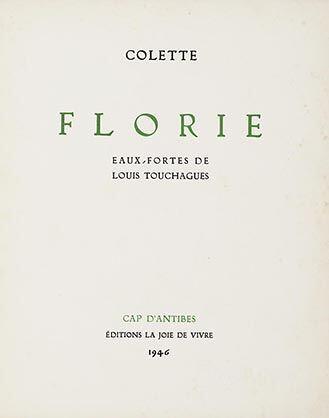
Hi All. I'm trying to identify this typeface "FLORIE" from a reference I found from 1946 - particularly the shape of the capital O and R. Any help would be much appreciated!
-
Appears to be Schreibmaschinenschrift by Berthold (BQ) Foundry. No longer sold, but pirated digital versions can be found.... Elsner + Flake (EF) used to sell a distressed version call Old Typewriter by Thomas Sokolowski, also no longer commercially available.
-
Hi, I'm looking for the font used for "Cooking It Down..." and "Illustration by..." in a newsletter sent by Rose Los Angeles. https://d3k81ch9hvuctc.cloudfront.net/company/RZj4pb/images/bd563439-3982-4e68-a684-6c061cd5816e.jpeg Thanks. A


-
I actually have a Berlin Sans on my computer. I have no idea if it came in with some version of Windows, some version of Microsoft Office, or some aftermarket font set I've accumulated over the years.
- Last week
-
ah ok thanks, well if anyone a close enough related digital typeface, i'm all ears.
-
Sorry, that is an example of hand lettering, not a typeface. Didn’t find anything comparable in a digital typeface
-
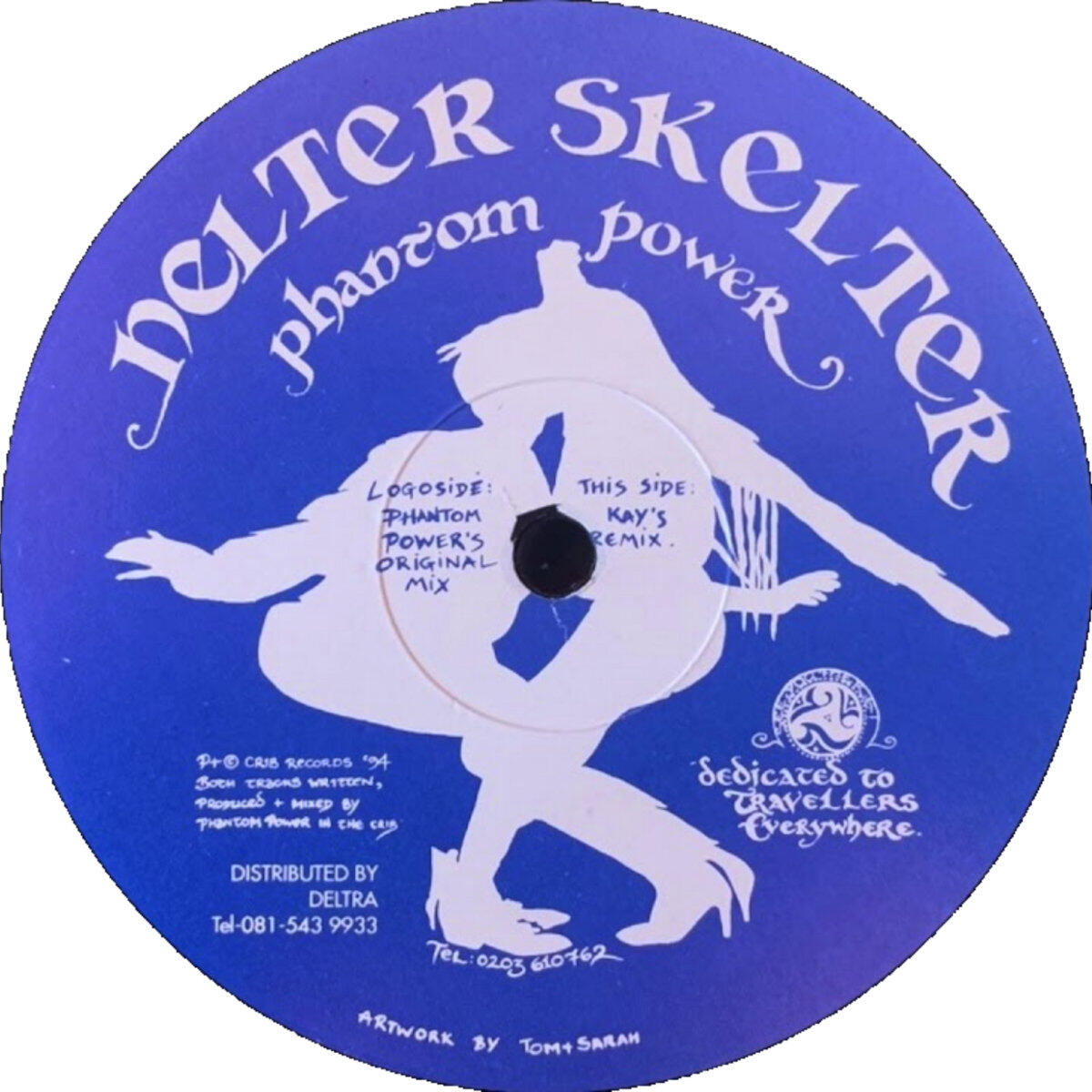
Font from a rave / breakbeat / house record from 1994 by Phantom Power on Imperial Recording . link to the record in question https://www.discogs.com/fr/release/7725928-Phantom-Power-Helter-Skelter similar fonts / free fonts are welcome, thanks
-
Helter0189 joined the community
-
Brilliant one more time, Kevin! 🤩
-
Negro (late 1920s) by Lucian Bernhard, also digitally revived as Berlin Sans
-
VFC Besson is the closest I've found. https://www.myfonts.com/products/vfc-besson-vintage-fonts-collection-32746?queryId=undefined&index=universal_search_data&objectIDs=5414892002 Essay Display is kinda/sorta similar. https://www.myfonts.com/products/display-essay-322042?queryId=undefined&index=universal_search_data&objectIDs=8662906001
-
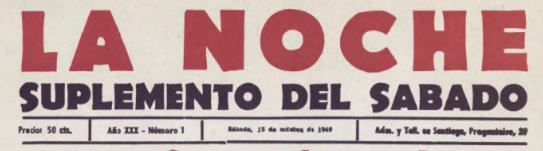
I want to know about the font used in the words «La Noche» and «Suplemento del sabado». Thanks a lot
-
millionaireblitz joined the community
-
Need to match this font exactly so I can put it on a type path in Illustrator. It is for a plumbing client called Darnold & Lyons. darnoldandlyons.com

-
THAT'S IT!
-
chticamember joined the community
-
Foam seems to be based on Obliq, a Letraset typeface from 1984. Harold now offers it under the name Obligado.
-
Found a match if not similar, I found it as Foam by Harold Lohner, but can't find it anywhere for purchase. All I found is this: FOAM computer fonts v1.0 2006 Harold Lohner [email protected] www.haroldsfonts.com

-
I use Futura for titles and headings. I have always liked it. I don't think it's suitable for body text.
-
I merged the accounts manually. (keeping the new one)






.thumb.png.51dfb6cc71a655bbb607ec7a044b60c4.png)